
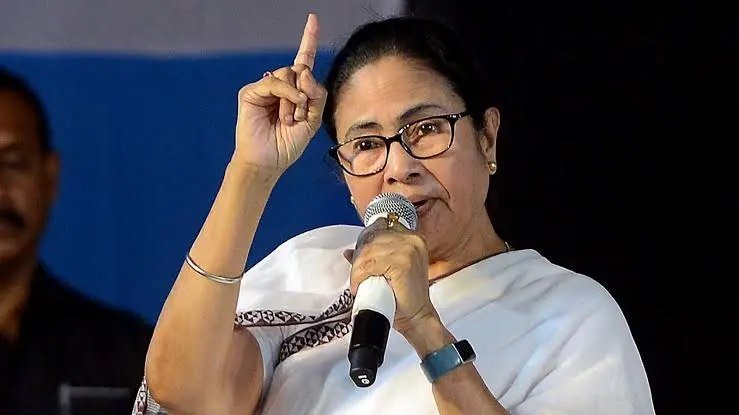
Mamata Banerjee’s political ideology is best understood as pragmatic regional populism, anchored in Bengali sub-nationalism, welfarism, and a fiercely anti-centralist posture rather than any rigid doctrinal framework like Marxism or classical liberalism.She founded the Trinamool Congress (TMC) in 1998 after breaking from the Congress, positioning it as a vehicle to challenge the 34-year Left Front rule in West Bengal. Her signature slogan, “Ma, Mati, Manush” (Mother, Land, People), encapsulates this worldview: an emotional appeal to maternal protection of Bengal’s soil and its ordinary citizens. The party’s two-flower symbol explicitly signals Hindu-Muslim unity, and official documents emphasize secularism, social justice, democracy, and upliftment of the downtrodden.
Core Elements of Her Ideology
At its heart lies populism with a regional face. Banerjee cultivated an ascetic, street-fighter image — the “Didi” who walks among the people, paints, and lives simply. This “political asceticism” helped her claim moral legitimacy against both the “elitist” Left and, later, the “authoritarian” BJP-led Centre. She framed politics as a battle between the powerful and the vulnerable, with herself as the protector of the latter.Welfarism formed the practical core. Schemes like Kanyashree (for girls’ education and empowerment), Rupashree, Swasthya Sathi health coverage, and direct cash transfers created a direct, visible link between the leader and beneficiaries, especially women and the poor. Supporters rightly credit these for improving certain social indicators and building a loyal base.
Secularism and minority outreach were central to her positioning. She positioned TMC as the bulwark against BJP’s Hindutva, often accusing the Centre of undermining federalism and Bengal’s plural fabric. This resonated strongly with Muslim voters and helped consolidate a formidable electoral coalition. Regionalism and anti-Centralism completed the package. Whether fighting the CPI(M)’s “authoritarian” control or later the BJP’s alleged interference, Banerjee consistently championed state rights and Bengali identity. Her politics thrived on the narrative of Bengal versus Delhi.
Strengths and Record
This ideology delivered electorally for 15 years. In 2011, she ended the world’s longest-serving elected communist government with the promise of Poriborton (change). Her welfare model and personal connect kept TMC dominant through 2016 and 2021. She broke gender barriers as a mass leader and gave voice to sections long marginalised under Left rule. Her defiance of central agencies and vocal defence of federalism struck a chord in a state with strong regional pride.However, the ideology’s limitations became increasingly apparent. It remained heavily personality-driven rather than institutional. TMC often replicated the very practices it once condemned — political violence, syndicate control over local economy and contracts, and administrative capture. Corruption scandals, particularly in education and recruitment, eroded credibility. Economic transformation lagged; industrial flight from the Singur-Nandigram era continued in perception if not always in data. Critics argued that “secularism” frequently translated into selective minority appeasement, while law-and-order and women’s safety concerns mounted.
The 2026 Reckoning
The 2026 West Bengal Assembly elections delivered a decisive verdict. The BJP secured a historic majority with 207 seats and around 46% vote share, while TMC was reduced to roughly 80 seats. Mamata Banerjee herself lost her Bhabanipur constituency. Anti-incumbency, governance fatigue, allegations of corruption and syndicate raj, and possible Hindu consolidation played roles. Voters appeared to reject the idea that welfare populism and anti-Centre rhetoric could substitute for accountable administration, economic opportunity, and basic security.Banerjee’s refusal to immediately accept the mandate and her claims of conspiracy reflected the defensive, conspiratorial turn her politics had taken in later years. It also underscored how personality-centric ideologies struggle when the leader’s aura no longer compensates for systemic shortcomings.
Overall Assessment
Mamata Banerjee’s ideology succeeded as a mobilisational force because it spoke directly to emotions — pride in Bengal, protection of the vulnerable, and resistance to perceived outsiders. It proved adept at winning elections and distributing benefits. Yet it proved weaker at governing and building durable institutions. Like many populist projects, it excelled at “us versus them” framing but struggled with the harder task of inclusive, corruption-free development.In the end, her approach exemplified both the promise and peril of regional populism in India: it can disrupt entrenched power and deliver targeted relief, but without strong internal democracy, economic vision, and accountability mechanisms, it risks becoming the very thing it once opposed, a patronage network sustained by personality and identity rather than performance.The people of West Bengal, who once embraced “Ma, Mati, Manush” as a cry for change, ultimately judged in 2026 that the ideology had run its course. That verdict stands as the most honest commentary on its strengths and its limits. True political renewal in Bengal will now depend on whether new forces can offer something more substantive than another cycle of slogans and welfare promises.